
A conference is held in a room somebody else owns. At regional scale almost nobody builds or rents a purpose-made conference centre: the event borrows a lecture theatre, a cinema before its first screening, a room in a civic building, or a hall a company keeps for its own all-hands. The choice of room decides the capacity, the capacity decides the ticket price, and the ticket price decides how much sponsorship has to be raised.
This page describes the kinds of room that work, with a real example of each. The examples are real buildings photographed by other people; none of them is connected to this site, and none is being recommended or booked here.
The university lecture theatre
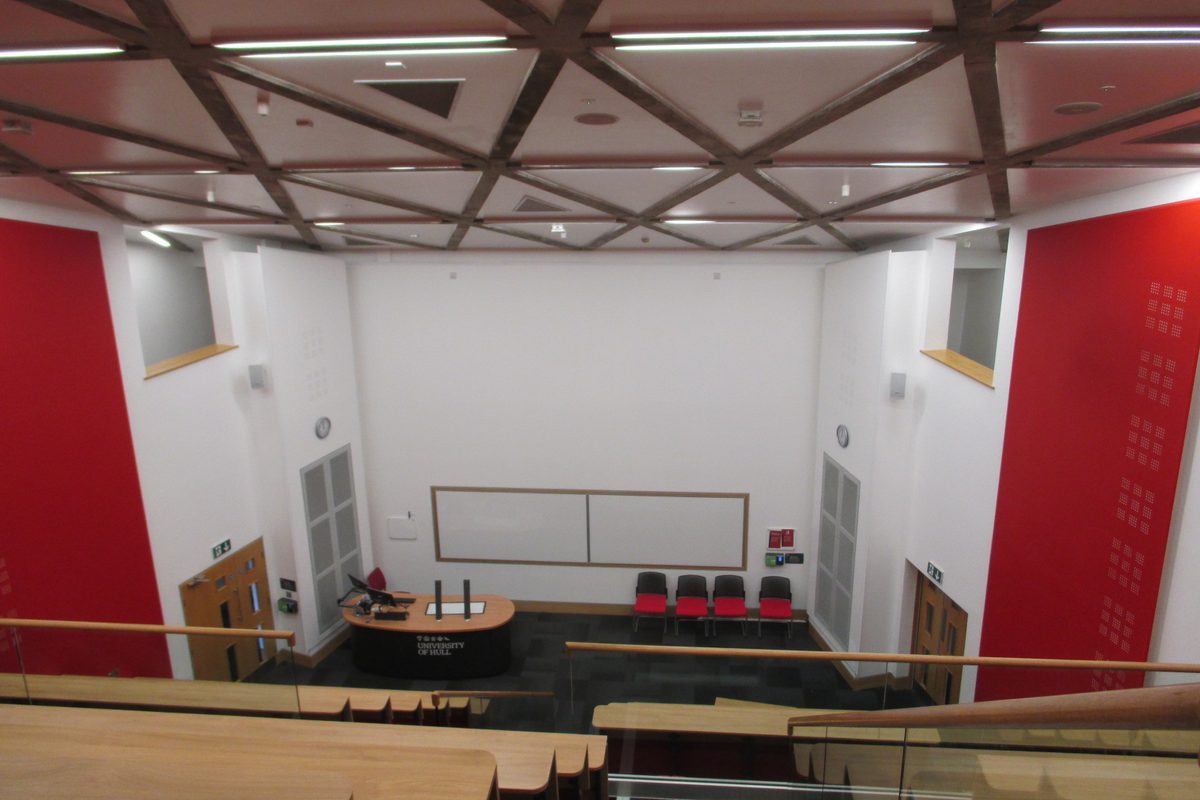
The commonest venue for a regional developer event, and usually the cheapest, because universities let rooms outside term at rates no commercial space matches. The projection and the sound are already installed and already work, which removes the single most expensive line from an audio-visual quote.
What it costs in exchange: fixed seating and a raked floor. Rows bolted to the ground cannot be rearranged for a workshop, and a raked theatre makes the room hard to leave quietly, which suppresses the movement between sessions that the hallway track depends on. It also means the catering has to happen somewhere else entirely, because nobody is eating on a bench with a fold-out writing surface.
The concert or ceremonial auditorium
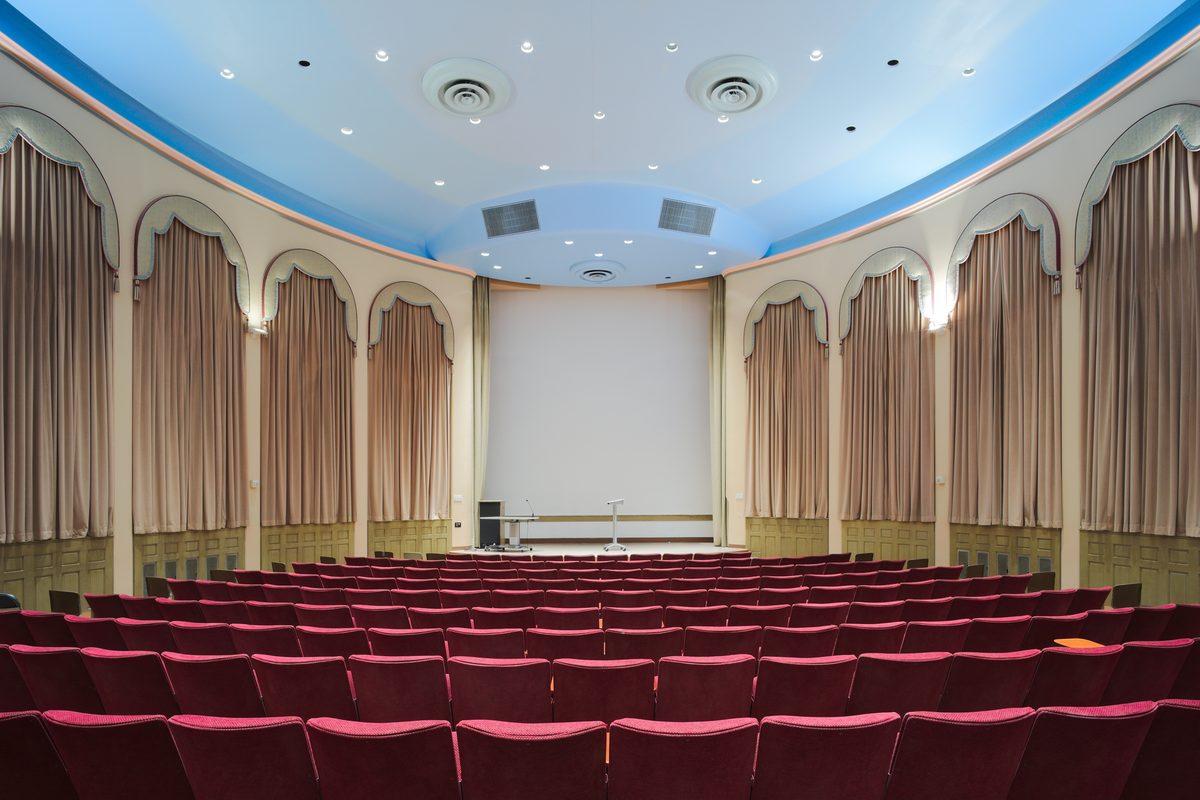
Larger, more formal, and frequently available to a community event at a modest rate when the owner is a university or a foundation. The acoustics are designed for an unamplified voice, which is a real advantage: a speaker who loses a microphone is still audible.
Where it goes wrong is scale. A room built for six hundred holding a hundred and fifty reads as an empty room, and an audience spread thinly through it stops behaving like an audience: nobody laughs, questions dry up, and the speaker gets no signal back. Roping off the rear rows costs nothing and fixes most of it.
The cinema, before its first screening
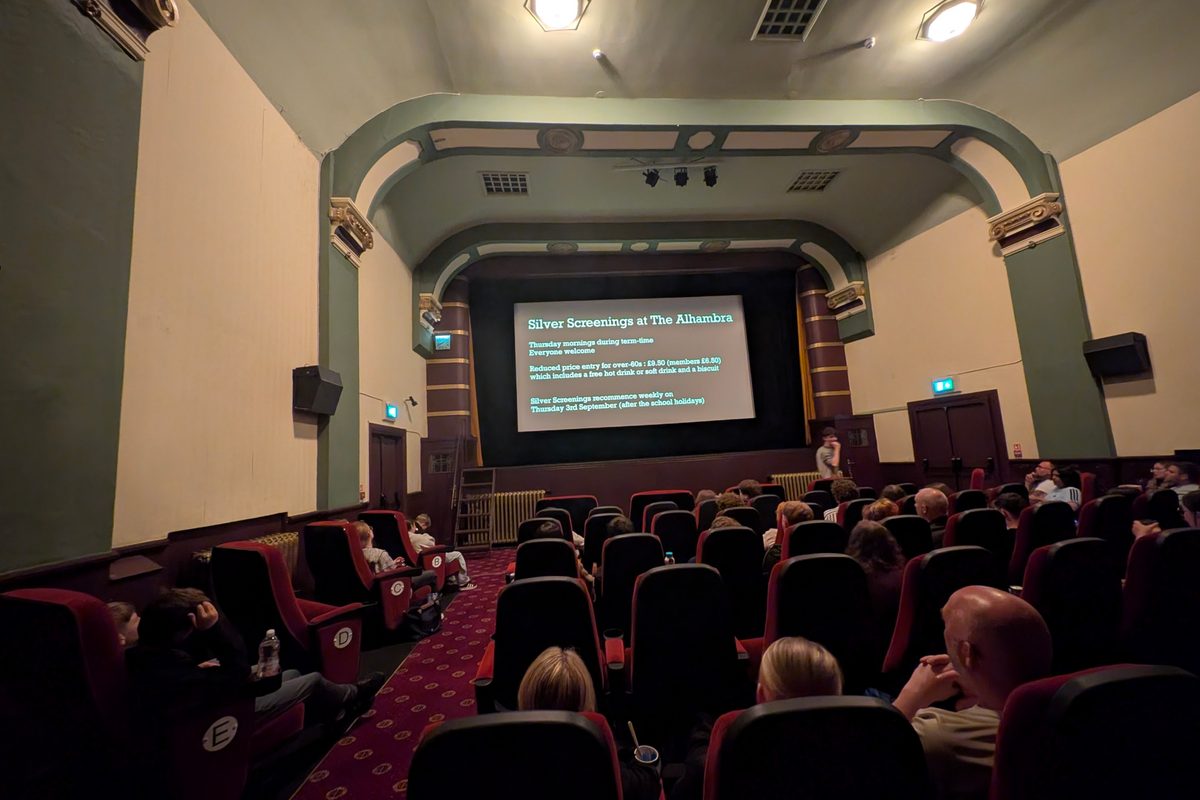
A cinema is idle every weekday morning and its owners know it, which makes the rate negotiable. It has by far the best projection and sound of any venue on this page, comfortable seating, and a foyer already built for a crowd holding drinks.
The constraint is the clock. The room is needed back for the first paying screening, which puts a hard end on the day at a time the event does not control. It is also dark by design: a room set up so nobody can see anybody else is a room in which nothing social happens between talks.
The civic or institutional hall
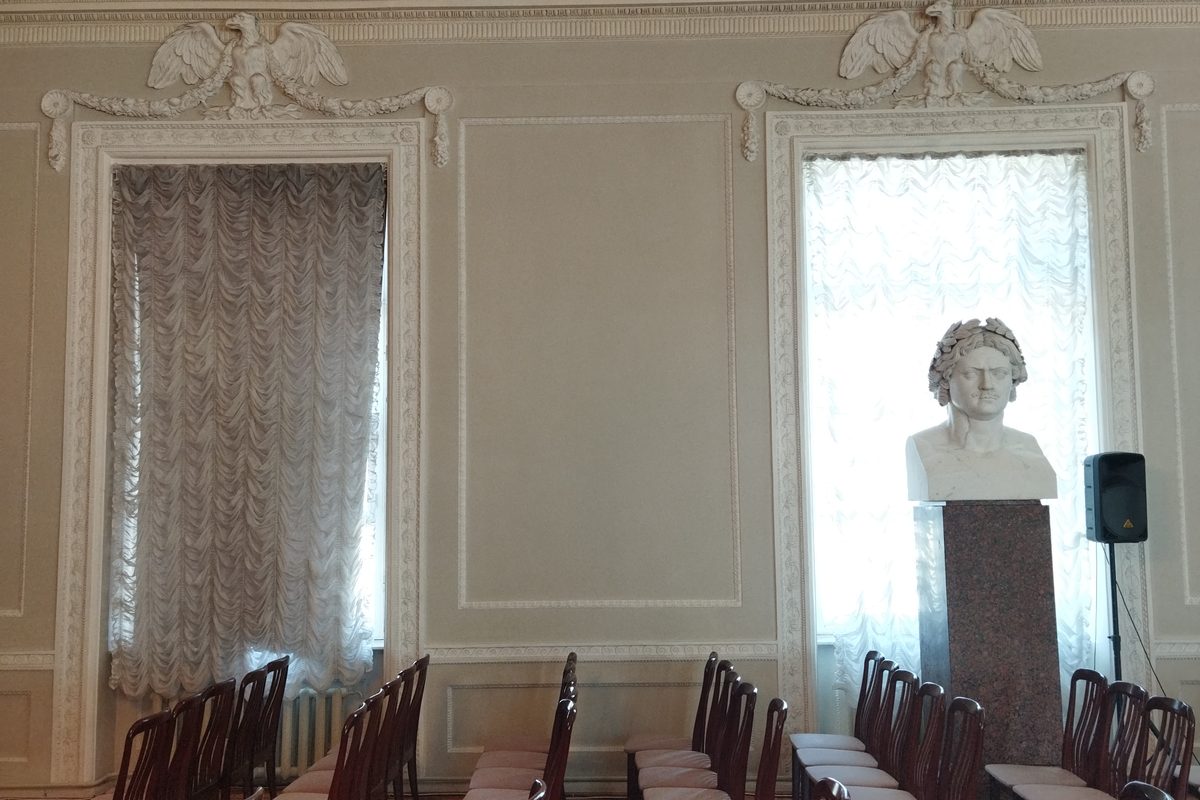
Town halls, libraries, academies, learned societies and museums all keep a room like this, and they let it far more cheaply to a non-commercial event than a hotel will. The decisive feature is loose chairs: a flat floor with movable seating is the only arrangement that supports a workshop, a fishbowl and an ordinary talk on the same day.
What to check before signing: power. Grand old rooms frequently have two sockets and no floor boxes, which is enough for a projector and nothing else. Ask where the sockets are, not whether there are any.
The largest example of a borrowed room
The argument on this page holds at a scale that surprises people. FOSDEM, one of the largest developer conferences in the world, has never built or hired a conference centre: it is held every year on the Solbosch campus of the Université libre de Bruxelles, in the university’s own lecture rooms, over a weekend when the students are not using them.
Two main tracks run in the Janson auditorium and the K building, and around sixty-five further rooms are handed to the communities behind individual projects for the weekend. Attendance runs to several thousand. Everything on this page about borrowed rooms, fixed seating and where the catering goes applies there too, multiplied.
Eight thousand people, in somebody else’s lecture rooms.
Real rooms, by type
Named examples of each kind of room, all of them real buildings with a public record. Only the first is listed as a conference venue; the rest are examples of the type rather than recommendations, and none of them is connected to this site.
| Place | Where | Kind of room |
|---|---|---|
| ULB Campus Solbosch | Brussels, Belgium | University campus: one large auditorium plus dozens of ordinary teaching rooms |
| Applied Sciences building, University of Hull | Hull, United Kingdom | Raked lecture theatre, fixed bench seating |
| Frick Fine Arts Building, University of Pittsburgh | Pittsburgh, United States | Ceremonial auditorium, tiered, unamplified acoustics |
| Great Hall, University of Leeds | Leeds, United Kingdom | Ceremonial hall, loose seating on a flat floor |
| Alhambra Cinema | Keswick, United Kingdom | Independent cinema, one screen, foyer attached |
| Academy of Sciences building | Saint Petersburg, Russia | Institutional hall, movable chairs, tall windows |
| Brisbane Convention & Exhibition Centre | Brisbane, Australia | Purpose-built centre: the expensive end of the range |
What the list is for is calibration rather than booking. A first-time organiser usually starts by pricing a convention centre and stops when the quote arrives; the useful move is to work down that table instead, because the rooms nearer the top cost a fraction of the ones at the bottom and suit a small event better.
What actually decides the room
Reading across the four, the same short list decides it every time, and it is not the one people start with.
| Question | Why it decides |
|---|---|
| Can the chairs move? | Fixed seating rules out every format except a talk |
| Where does the food go? | Catering next to the room is the hallway track; catering in another building is a queue |
| How many power sockets, and where? | Decides whether a workshop is possible at all |
| What time must it be handed back? | A hard end nobody controls reshapes the whole schedule |
| Is it step-free, throughout? | A step-free entrance and an inaccessible stage is still an inaccessible venue |
Ask where the sockets are. Not whether there are any.
What to avoid
A hotel conference suite, unless somebody else is paying. The rate is built for corporate budgets, the catering is usually contractual rather than optional, and the rooms are interchangeable in a way people remember as nothing at all.
A room without a second room. An event needs somewhere that is not the talk: a corridor, a foyer, a landing. A venue that is one hall and a fire exit has no breaks, whatever the schedule says.
A space still being refurbished, however good the price. Dates slip, and a venue that is not ready three weeks out is a venue the event has to replace at the worst possible moment.
Where the money for any of this comes from is on conference sponsorship, the order these decisions get made in is on organising a conference, and how the room shapes the day is on programme and tracks. The events that used rooms like these are indexed in the regional conference index.
Questions
What kind of venue suits a small conference?
A room with movable chairs, a second space next to it for coffee, enough power sockets for whatever the programme needs, and no hard handback time. University lecture theatres, civic halls and cinemas each meet some of that and miss others.
Why are university rooms the usual choice?
Price and equipment. Universities let rooms outside term at rates no commercial venue matches, and the projection and sound are already installed and already working, which removes the largest line from an audio-visual quote.
What is wrong with a room that is too large?
An audience spread thinly stops behaving like an audience: nobody laughs, questions dry up, and the speaker gets nothing back from the room. Roping off the rear rows costs nothing and recovers most of it.
What is the most overlooked thing to check?
Power, and specifically where the sockets are rather than whether any exist. Grand old halls often have two sockets and no floor boxes, which is enough for a projector and nothing else, and it rules out a workshop after the programme has been published.
Are hotel conference suites worth considering?
Rarely, unless somebody else is paying. The rate is built for corporate budgets, the catering is usually contractual rather than optional, and the rooms are interchangeable in a way people remember as nothing in particular.